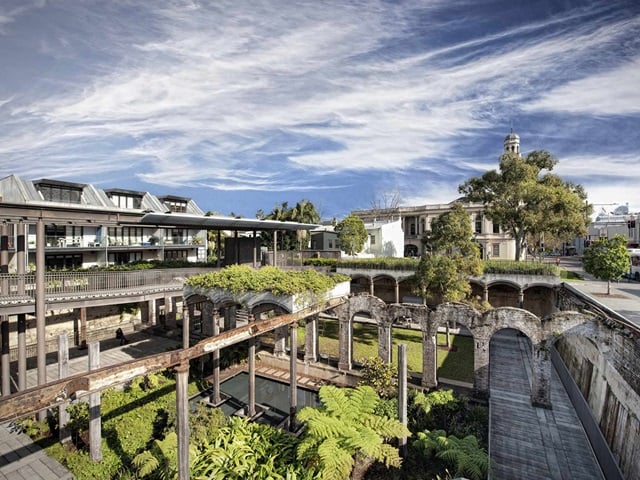
Greening and nature
We’re working to create an urban forest and support biodiversity to provide demonstrated benefits of plants and animals in our city.

Why we’re doing this
Sydney’s natural landscape has changed dramatically and is nearly unrecognisable from its state before the arrival of the First Fleet more than 2 centuries ago.
There has been a huge drop in the number of native trees, plants and flowers with the clearing of forests, filling of swampland and changes to the shoreline, not to mention the construction of buildings, streets and footpaths.
However, we know that urban nature plays a vital role in the health, social framework and economic sustainability of a city.
The benefits of urban biodiversity are numerous. It is well known that urban biodiversity contributes to mitigating flooding and heat. The health and wellbeing benefits are well documented and access to urban nature is known to reduce stress.
Trees work for us every day, improving our environment and quality of life. In just 12 months, one mature tree can absorb 3,400 litres of stormwater, filter 27kg of pollutants from the air and provide a cooling effect equivalent to running 10 air conditioners continuously.
Action areas
- Trees in our area create an urban forest that contributes greatly to the city’s character. They’re integral to making Sydney a green, global and connected city. We’re working to create an urban forest with greater tree cover and more diversity to provide these proven benefits of plants and trees in our city.
- We have more than 400 parks for the enjoyment of everyone. They help green the city as well as provide recreational benefits.
- We are working hard alongside our communities to protect our precious urban wildlife and green spaces. We are running a range of biodiversity projects in different parts of the city.
- Spaces owned by the state government's public transport and utility authorities occupy large tracts of land, which is often in prime locations and within potential green corridors. Increased greenery in these spaces can help boost the urban canopy and wildlife habitat, so we aim to work in partnership with the relevant authorities.
- We have landscaped more than 28,000 square metres of public space. Greening local streets and open spaces can have a flow-on effect as people are inspired to exercise, get some fresh air, hang out with old friends and make some new ones.
- Local streets we have upgraded are also doing their bit for increased environmental sustainability as they help collect and filter stormwater.
How we can achieve these goals
Sydney will become even leafier and healthier under our plans to green the city, helping reduce power bills as well as beautifying inner-city properties. Our urban forest is set to grow up to 50% by 2030.
Here’s a look at some of our strategies around greening and nature:


Our programs and initiatives
Sydney is one of the global cities that is still home to many green places and native wildlife.
Volunteers are the lifeblood of any large-scale project and there can never be enough hands to help green our city.
Our residents have already shown an interest and commitment in spreading the green goodness with efforts such as the Glebe Bushcare Group, Rozelle Bay Community Nursery, the Pyrmont Ultimo Landcare Group and the Glebe Society’s Blue Wren Group.
We are developing and supporting green initiatives in the community by offering clear and ongoing communication, education and support as well as its range of grants for specific projects.
Other programs and initiatives
Guides
Living with local wildlifeWe’re lucky to live in this amazing city. But it's not just us who call it home. In fact, sometimes we have to look very low (or very high) to see who our neighbours really are.Published 11 January 2023Guides
Urban habitat creation guideHow you can help native animals in the city by creating native gardens and habitat.Published 1 May 2019Community groups
Biodiversity volunteering groupsHelping to restore local bushland by growing native plants, weeding and working to encourage birds, lizards and other species to live in our villages.Community gardens
Sydney City FarmAn urban agriculture project in Sydney Park, connecting the city with the country.St Peters