City of Sydney

| Skip to Content | Skip to Menu | Careers  | Contact Us  |   About Us  |   Media Releases

Hyde Park

Hyde Park


Hyde Park North

Hyde Park North Schematic Map

Elizabeth St
Sydney NSW 2000

Hyde Park South

Hyde Park South Schematic Map

Elizabeth St
Sydney NSW 2000

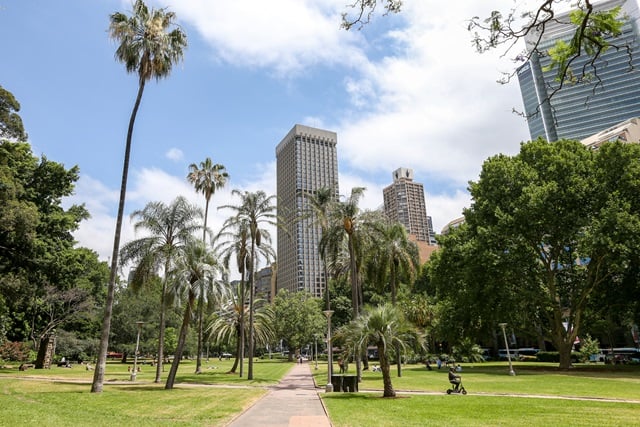
Gazetted in 1810, Hyde Park is Australia’s oldest park. Divided by Park Street, the southern section of Hyde Park contains the ANZAC Memorial building and visitor centre, the pool of reflection and numerous monuments and statues. The northern section features the iconic Archibald Fountain and various theme gardens including Sandringham and Nagoya Gardens replete with public art works, monuments and water features.

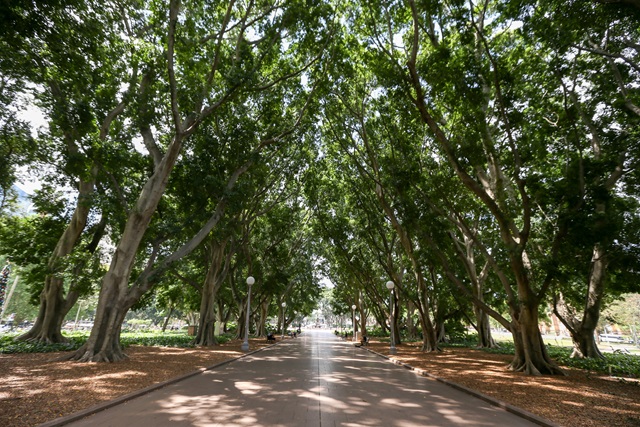
The park contains around 580 mature exotic and native trees including the historic central avenue of Hill’s Figs which line the central pedestrian avenue running from Macquarie Street to the ANZAC Memorial.

Public amenities include automated public toilets located around the periphery and cafes situated within the southern and northern sections of the park off Elizabeth Street. Bicycle parking is available for cyclists and the park is well serviced by bus and rail links; Museum Station and St James Station are located respectively beneath the southern and northern parks.

The park plays host to a number of cultural events throughout the year including the Sydney Festival, Australia Day, ANZAC Day and the Food and Wine Fair. The park is a popular attraction for residents, workers and tourists who congregate throughout the year to enjoy the varied sights and sounds of this green iconic and central public space.

The City has prepared a comprehensive Plan of Management and Master Plan including a Tree Management Plan to inform and guide the sustainable management of the park for the benefit of the current and future generations of residents and visitors. Sustainable management themes include the preservation of the culturally significant landscape, the conservation and restoration of historically significant monuments and structures, improved accessibility to and within the park and ensuring the sustainable use of the park for community events.

Back to top

Hyde Park Time Line

18th Century

The area we now call Hyde Park becomes a place where soldiers can be quickly assembled in case of a convict rebellion.

1810

Hyde Park gazetted as a ‘common’ by Governor Macquarie and named after Hyde Park in London.

19th Century

Hyde Park becomes the location of Sydney's first formal sports field and racecourse. Prize fights and cricket matches are held. The park gradually develops a passive recreational focus becoming increasingly gardenesque.

1920s

Hyde Park suffers significant disruption and degradation during extensive open cut excavations to construct underground Museum and St James stations and Sydney’s railway infrastructure. In 1929 The Sydney Morning Herald reported the southern end of the park, where the ANZAC Memorial now stands was a mountain of excavated soil and the southwest corner had been a railway construction site for more than twelve years.

1927

A competition for a “comprehensive layout and beautification scheme” for the park is won by architect and landscape architect, Norman Weekes. Hyde Park as we know it largely reflects this plan.

1989

After 60 years of ad-hoc changes, a comprehensive Plan of Management is prepared for Hyde Park which guides the restoration of the park toward the original 1927 principles.

2006

City of Sydney announces a new draft Plan of Management and Masterplan for Hyde Park, true to the original plan but designed to preserve the park throughout the 21st Century.

Hyde Park Trees

The Hyde Park Tree Management Plan (TMP) focuses on the trees in Hyde Park North and Hyde Park South. It includes a survey of all of the existing trees in the Park and contains relevant heritage, environmental and arboricultural data relating to individual trees as well as distinct groups of trees such as avenue plantings.

More information or bookings >>

Gallery

Hyde Park >>

Downloads

Maps

Schematic maps illustrating the park layout and surrounding utilities and services.

Schematic maps illustrating power outlets, water access and vehicle access for event organizers.


To view PDF files you must have Adobe Acrobat Reader installed on your computer. Get Acrobat Reader Now. PDF Accessibility.


Back to top


Last Updated: Monday 17 May, 2010

Please Note:
While care is taken to ensure accuracy, the City of Sydney cannot guarantee that information expressed here is correct and recommends that users exercise their own skill and care with respect to its use. The City of Sydney makes no warranty or undertaking, whether expressed or implied, nor does it assume any legal liability, whether direct or indirect.