City economic insights
A snapshot that explores emerging economic and business trends and seeks to understand their longer-term impacts on the city.
Published
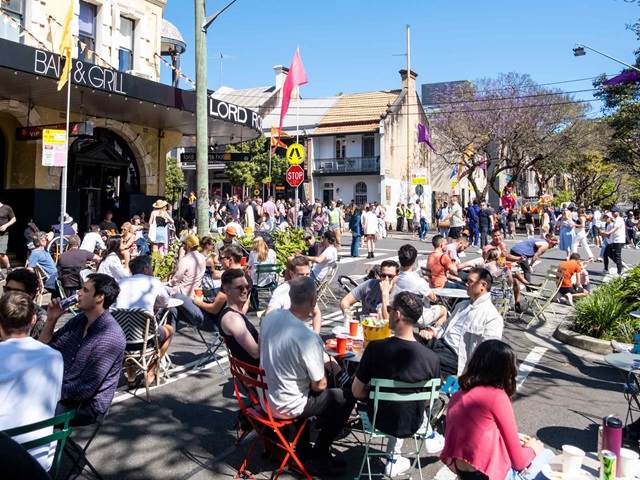
These periodic studies show how people use, visit and spend in the city.
Previous snapshots
- Weekly average consumer spend was $294.3 million in March 2026, up 6.9% from March 2025.
- Shoes and clothing spend showed the greatest year-on-year growth in Q1 2026, up 14.4%. Dining spend was up by 7.9%, while bar and club spend increased by 7.0%.
- Weekly average visitation by public transport to the city centre was 3.48 million in March 2026, up 6.1% from March 2025. Thursday was the busiest day in the period.
- Short-term overseas visitor arrivals to Sydney were 3.41 million in the year to February 2026, up 9.6% from the previous year. Growth is largely driven by arrivals from China, up 73% year-on-year making it the top country visitors.
- Consumer spend across high streets and neighbourhoods showed mixed results. Spend increased year-on-year in King Street, Haymarket and Redfern, while Glebe Point Road, Harris Street and Stanley Street recorded decreases.
PDF · 643 KB · Last updated 22 April 2026- Spend is seasonal and peaks at the end of the year, with a sharp drop in January. Highest spend days occur on Black Friday and in the week before Christmas.
- Spending in November 2025 was particularly strong, hitting record levels as the highest nominal spend month ever observed in the city.
- Heavy rain impacts spend and visitation, but the impact varies by day of the week.
- Thursday visitation in November 2025 showed the strongest growth, growing 11.2% from the previous year to resume position as the peak day of the week.
PDF · 643 KB · Last updated 22 December 2025- Tuesday was the busiest day for visits to the city in September, continuing the shift in peak activity from Thursday to earlier in the week (also seen in June and August).
- Growth in consumer spend was strong in September. Weekly average consumer spend was $264m, up 7.2% from September 2024. Saturdays were the highest spending day ($46m on average) and Sundays the lowest ($31m on average).
- Spend on all high streets, except King Street, was significantly higher in the financial year 2024/25 than pre-pandemic levels. Stanley Street showed the strongest growth with spend up 48%, followed by Haymarket, up 43.5% (all in nominal terms).
- High street spend is driven by visitors. Regional visitors are the fastest growing spend segment. Spend by visitors from regional NSW and interstate regions is up 8.0% and 9.5% respectively, year-on-year.
- Growth in spend is a sign of the city ’s resilience amid uncertainty. Weekly average consumer spend in April 2025 was $251 million, up 2.3% year-on-year.
- The largest contributors to total spend in the city are 25 to 34-year-olds making up 25% of total spend. But their spend is declining, down 2.2% in the year to April 2025.
- Decline in the bar and club spend of the 25 to 34-year-old age group was 10% in the year to April 2025, compared with the previous year. This is more than double the decline in spend by 55 to 64-year-olds and those aged 65+. In contrast, dining spend remained resilient despite cost-of-living pressures across all age groups.
- The City of Sydney local area has more than double the share across NSW of 25 to 34-year-olds. This age group represents 33% of the local resident population.
PDF · 643 KB · Last updated 3 June 2025- Consumer spend was strong in November after a subdued winter. Over the last year, the largest local spend categories were dining ($3.31 billion), specialised and luxury goods ($2.19 billion) and vehicles, freight and other transport ($1.39 billion).
- Median weekly rent in the City of Sydney local area has risen over the past 3 years, with units outpacing townhouses. Accelerated delivery of new dwellings is forecasted, which may help contribute to easing housing pressures.
-
The tourism sector has continued to recover throughout the year. Overseas arrivals for the year to September 2024 were up 23.8% from the previous year. International visitors are also staying longer and spending more when visiting Sydney.
PDF · 65.53 KB · Last updated 24 December 2024- The economy located within the City of Sydney generated $142 billion in 2023.
- The most recent floor space and employment survey shows 18,000 new jobs were created between 2017 and 2022.
- From 2017 to 2022, the City of Sydney area added more than 570,000sqm of business floor area to reach 18.4 million square metres.
- 8 distinct economic precincts have developed in our area, and these host 9 out of 10 jobs in the City of Sydney.
PDF · 577.8 KB · Last updated 4 November 2024- Tourism has rebounded strongly and visitor numbers are now at 82% of pre-pandemic levels.
- Asian markets have been slower to return to Sydney, with Chinese tourism at just 50% of 2019 levels.
- International student numbers now exceed 2019 levels with student numbers from China and India particularly strong.
PDF · 332.48 KB · Last updated 22 December 2023- There is a disparity in economic recovery between sectors, with a divide between those able to move to remote working and those that cannot.
- International and local events have played a big role in economic recovery, particularly WorldPride.
- City visitation has reached nearly 95% of pre-pandemic levels.
- Domestic travel continues to be an important driver of economic recovery, with international visits still at half of pre-pandemic levels.
PDF · 332.48 KB · Last updated 1 September 2023- Local spend across Sydney has recovered to 98% of pre-pandemic levels (after adjusting for inflation).
- Monthly local spend in March 2023 was $704 million up from $617 million in March 2022.
- Public transport journeys to central Sydney grew strongly in the 12 months to March 2023, rising to 84% of pre-pandemic levels.
- Sydney had 247,000 international visitor arrivals in February, up 16% from February 2022.
- International student arrivals to Australia increased to 74% of 2019 levels. Sydney’s international student population continues to exceed the national average, increasing 6% from November 2021 to November 2022.
PDF · 343.78 KB · Last updated 23 May 2023