Water management
Join us to help protect the supply of this precious and limited resource.

Why we’re doing this
More than 85% of Greater Sydney’s water supply relies on rain. This means water is in short supply during drought.
Challenges
Securing and managing water for our growing city and changing climate will become increasingly challenging. Climate change is already making our city hotter. Extreme weather events – drought, floods and extreme heat days – are becoming more frequent. This puts pressure on water use, which plays an important role in cooling our city.
Population growth also increases demand for water and places pressure on our ageing water pipes and sewers. Greater Sydney’s population is expected to grow from 4.7 million to 8 million over the next 40 years.
Ongoing development of our city increases hard surfaces and leads to increased stormwater pollution. We need to minimise hard surfaces and increase vegetation to ensure more water is retained in the landscape for greening and cooling and less pollution enters our waterways from stormwater run-off.
Together, we can make Sydney a water-sensitive city – one that is sustainable, resilient, productive and liveable.
A water sensitive city, according to the Greater Sydney Commission, is one that:
- provides residents, business and visitors access to high-quality landscapes, safe water and healthy waterways
- collects and recycles all sources of water and incorporates a green grid of parks, bushland and other vegetated areas to cool, clean and beautify open spaces and surrounding landscapes
- empowers communities to make their own decisions about water and creates social connections around urban waterways and water features.
Managing Sydney’s water
Responsibility for water in our local area is shared between the City of Sydney, Sydney Water and private water utilities.
Sydney Water manages drinking water, most wastewater services and about half the stormwater infrastructure, such as large trunk stormwater drains in our local area.
We manage the remainder of the stormwater network, and some stormwater harvesting and reuse schemes.
Private utilities own and operate some recycled water schemes that collect and treat wastewater locally and supply recycled water for non-drinkable uses.
.jpg?mw=640)

Report a leak
Our water targets
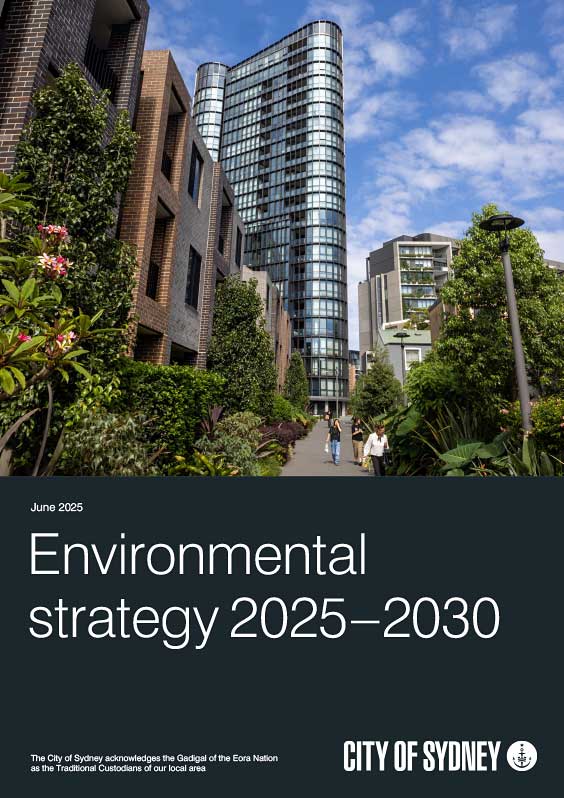
We set water targets for our own operations, as well as our local area, as part of our environmental strategy.Targets for our own operations
- Zero increase in drinkable water use by June 2030 from 2006 baseline, achieved through water efficiency and stormwater harvesting
Targets for our local area
- Reduce residential drinkable water use to 204L per person per day by 2030
- Reduce non-residential drinkable water use by 10% for each m2 by 2030 from 2019 baseline
Looking after the health of Sydney Harbour is important so we’ve set the following targets to reach by 2030 from our 2006 baseline:
- 23% reduction in total suspended solids
- 37% reduction in gross pollutants
- 12% reduction in total phosphorus
- 5% reduction in total nitrogen.
To reach these ambitious targets we also need action from the NSW and Australian governments to drive change and lift barriers outside our control.
How much water the city uses
In 2024/2025, we met our target of zero increase in drinkable water use. We used 375 megalitres across our own operations, such as in our buildings and for watering parks. This is a 13% decrease from our 2006 baseline.
Across our local area, including all homes and businesses, water use has increased since 2006 as the population has grown. Even so, our latest data shows total drinkable water use decreased by 3.8% compared with the previous year. This includes a 12% reduction in daily residential water use to 194L per person, per day.
You can follow the progress of our water and other sustainability projects in our green report.

Discover how to save water at home
More information
The Decentralised Water Master Plan is a reference document to the environment strategy. It contains useful background information, however any targets and actions have been superseded by the environmental strategy.